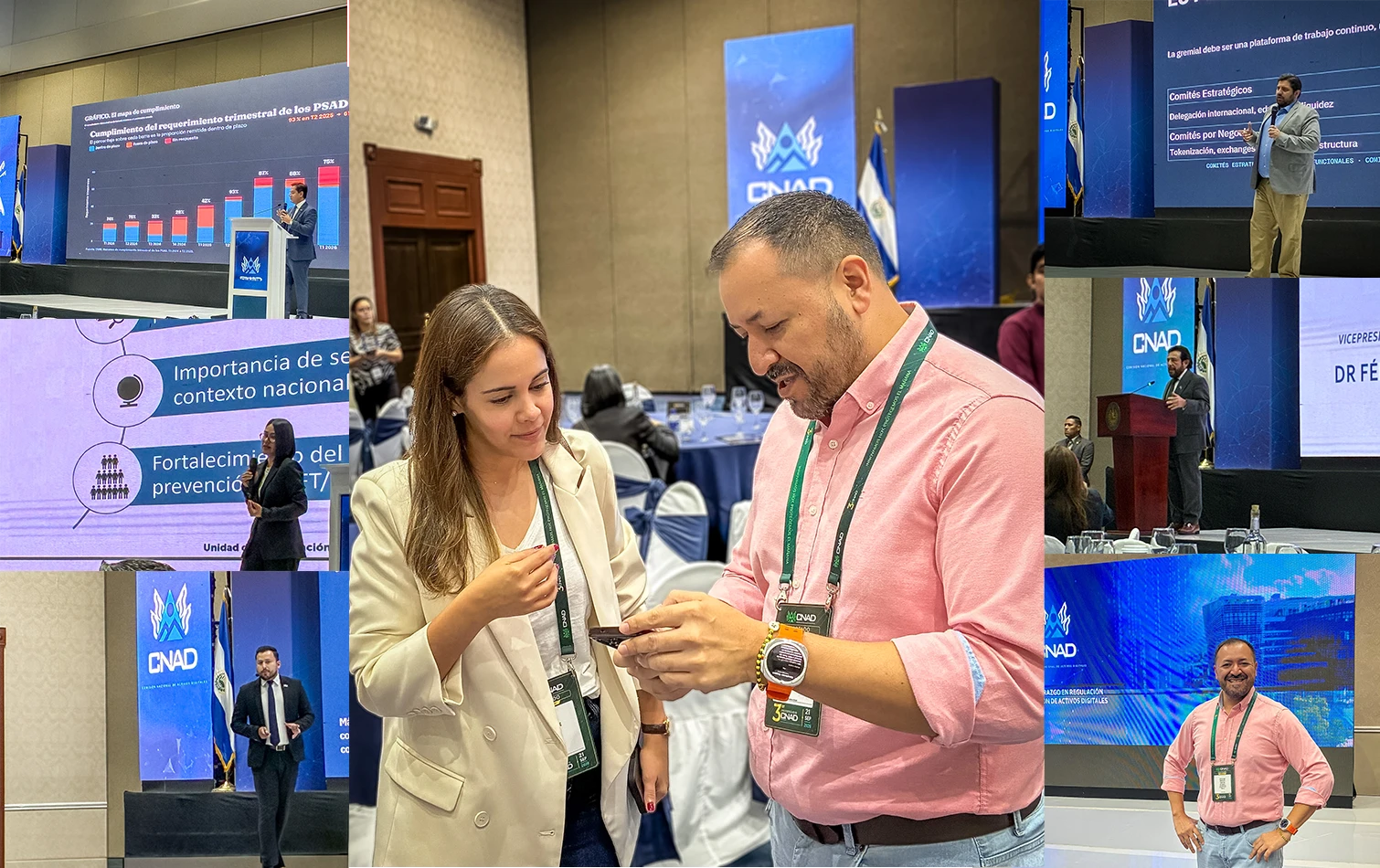
Lama was present at the commemoration of the third anniversary of the National Commission of Digital Assets (CNAD), a space that brought together representatives of the ecosystem to review the progress achieved and discuss the sector’s upcoming challenges and opportunities.
Last Monday, September 21, El Salvador marked three years since the creation of the National Commission of Digital Assets (CNAD), during a gathering held at the Sheraton Presidente Hotel in San Salvador.
Lama had the honor of being one of the companies invited to participate in this commemoration, represented by our Operations Manager, Brigham Santos, and our Compliance Officer, Flor González.
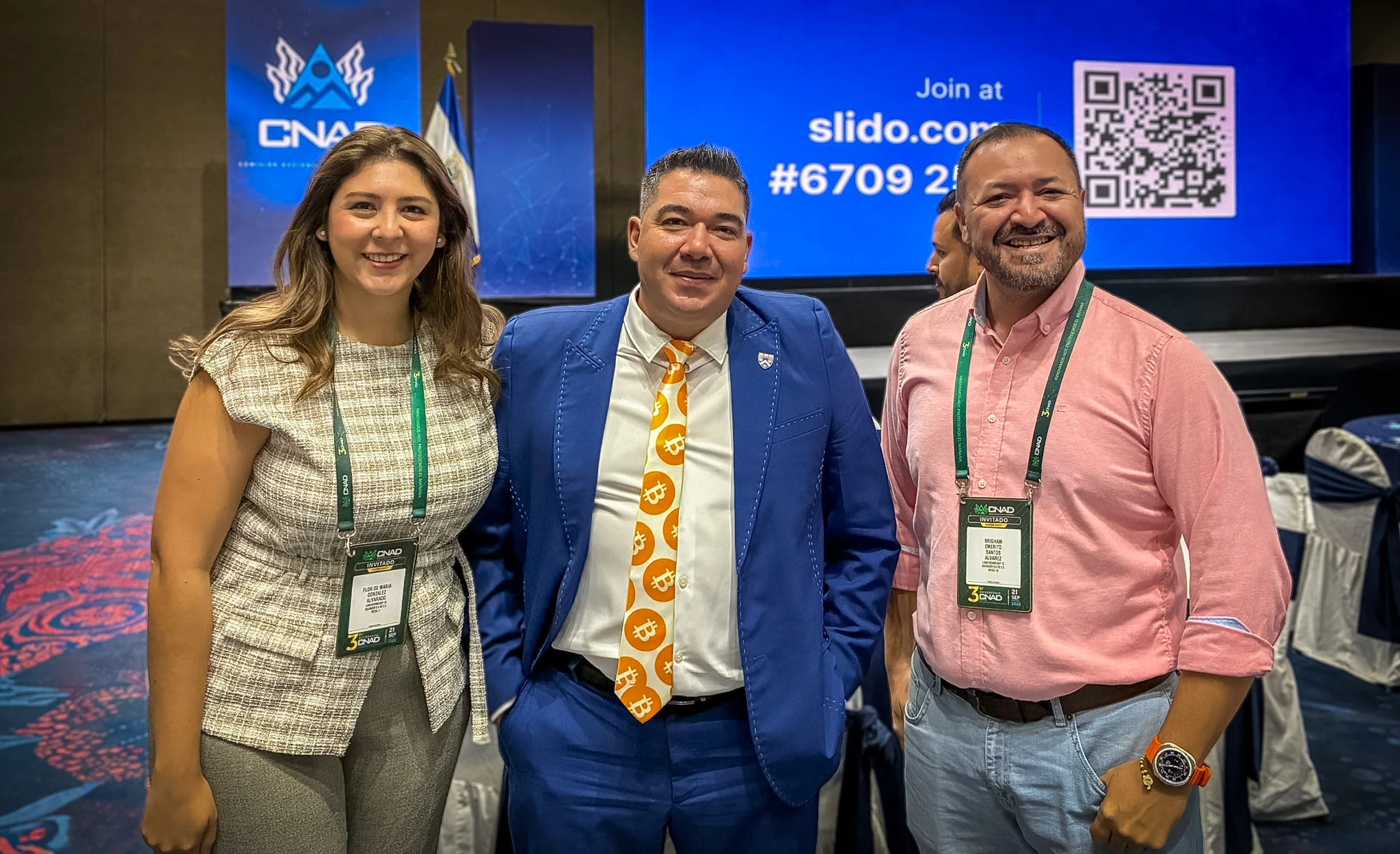
Beyond celebrating an anniversary, the gathering provided an opportunity to pause and observe how much the digital assets ecosystem in El Salvador has evolved, while also bringing to the table the challenges that accompany its next stage.
Three years building a regulated ecosystem
Since its creation, CNAD’s responsibilities have included establishing and supervising compliance with the rules applicable to digital assets, as well as registering and authorizing companies connected to this ecosystem. Its work also includes protecting users from fraudulent activities and promoting innovative practices within the sector.
During the event, figures were shared that reflect the growth this market has experienced over the past three years.
Among the data presented, the following stood out: 156 active companies within the supervised ecosystem, 144 with registry entries, 81 Digital Asset Service Providers (DASPs), and 46 issuers of digital assets and tokenized instruments. The existence of approximately US$633 million linked to tokenized real estate financing projects was also noted.
These numbers show that the ecosystem is no longer made up solely of emerging initiatives. Today, it includes service providers, issuers, platforms, certifiers, and other participants operating within a defined institutional framework.
A framework designed to support innovation
One of the central elements of the conversation was precisely the importance of having regulation that can accompany technological evolution.
CNAD’s public registry currently includes different categories of participants, including Digital Asset Service Providers, issuers, certifiers, and platforms linked to issuances.
For companies that are part of this ecosystem, regulation also represents a responsibility: operating under clear standards, maintaining adequate compliance processes, and helping build greater trust among users, companies, and institutions.
In that sense, the sector’s development does not depend solely on technology. It also requires transparency, risk management, prevention of money laundering and terrorist financing, cybersecurity, user protection, and sound operational practices.
It is precisely in the combination of innovation and responsibility that the ecosystem can continue to evolve.
Toward greater sector collaboration
Another topic presented during the event was the initiative to establish the Global Association of Digital Asset Providers of El Salvador, conceived as a space for representation and integration for the different participants in the sector.
The proposal seeks to facilitate dialogue among regulated companies and other ecosystem stakeholders, including financial institutions, legal firms, compliance specialists, and technology companies.
Its objectives include promoting best practices in areas such as prevention of money laundering and terrorist financing, custody, cybersecurity, and regulatory compliance.
For a sector that continues to grow and diversify, creating spaces for dialogue among its participants can help share experiences, identify common challenges, and build standards that support its development.
What comes next for the ecosystem
The celebration of these three years also served as an opportunity to look ahead.
The evolution of the regulated ecosystem presents new challenges: the growth of digital services, asset tokenization, the emergence of new financial models, and the need to maintain compliance standards aligned with an increasingly sophisticated market.
CNAD itself has noted that the experience developed in El Salvador has allowed it to share knowledge and provide technical assistance to other countries interested in developing regulatory frameworks for digital assets.
This places the conversation in a dimension that goes beyond local growth. The development of a regulated ecosystem also generates knowledge that can be shared with other markets exploring how to approach this new category of assets.
Lama: part of an ecosystem that continues to grow
For Lama, being invited to take part in this celebration represents an opportunity to connect with other industry participants and continue learning from those who are building this ecosystem.
Our commitment to El Salvador also means understanding that financial innovation must develop hand in hand with responsibility and compliance.
We believe the future of digital assets is not built solely through applications, platforms, or technology. It is also built through institutions, companies, and professionals working to create an ecosystem that is increasingly transparent, secure, and ready to grow.
Three years after CNAD’s creation, the sector has changed significantly. The coming years will bring new technologies, new models, and new challenges.
And from Lama, we are glad to be part of that conversation.
We keep building. 🦙
Tags
- #FinancialLiteracy
- #DigitalAssets
- #Blockchain
- #CyberSecurity
- #DigitalTrust
- #SecureTransactions
- #Tether
- #Ethereum
- #USDC
- #FrictionLess
- #fintech